Living in Fuquay-Varina and Holly Springs means you experience a little bit of everything: warm summers, humid fall afternoons, heavy spring rain, and the occasional winter frost that can surprise even the most experienced local driver. Preparing your vehicle for each season isn’t just about safety. It’s about preventing breakdowns, avoiding costly repairs, and keeping your family protected on the road.
That’s why these Seasonal Driving Tips for Fuquay-Varina and Holly Springs Residents matter. The better prepared you are for shifting weather, the smoother and safer your daily drive becomes.
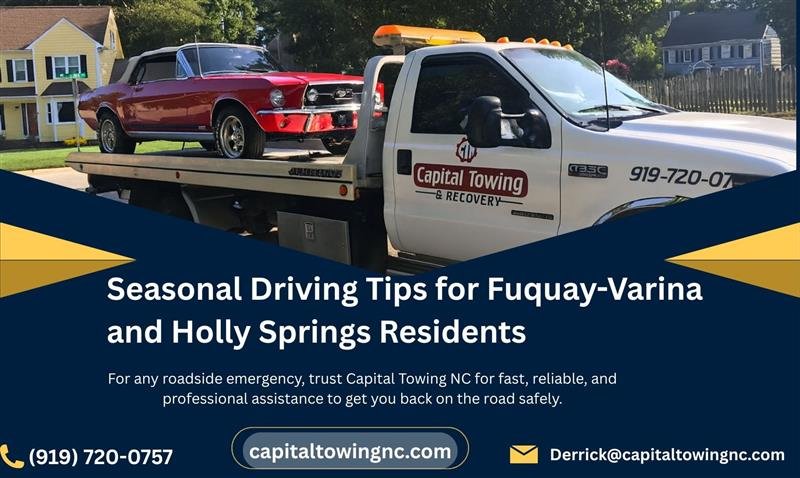
As a trusted towing partner in Fuquay-Varina NC and Holly Springs NC, CapitalTowingNC.com has seen firsthand what happens when cars aren’t ready for seasonal changes. This guide combines real roadside experience with practical steps you can use right away.
Understanding Our Local Weather Challenges
The weather here can shift quickly. One week feels like summer, the next brings cold mornings and fog rolling across NC-55. If you’ve seen the North Carolina dot winter weather preparations, you already know that even mild winters can create icy patches along hills, bridges, and shaded backroads.
The key is knowing what each season demands from your vehicle.
Season-by-Season Vehicle Safety Checklist
Winter: Cold Mornings, Slick Roads, and Battery Trouble
Winter around Fuquay-Varina isn’t extreme, but the temperature swings are enough to affect your car.
Here’s what to focus on:
- Check tire tread and pressure. Cold air makes pressure drop fast.
- Test your battery. Older batteries fail more often in winter.
- Top off coolant and antifreeze.
Replace worn wipers for foggy, wet mornings. - Keep a blanket, phone charger, and small emergency kit in your trunk.
You should also check Road conditions Raleigh NC before any early-morning commute. Black ice isn’t common, but when it does appear, it’s usually before sunrise.
Spring: Rainstorms and Hydroplaning
Spring brings heavy rainfall, low visibility, and slick roads. This is when breakdowns and roadside calls increase the most.
Focus on:
- Replacing old wipers
- Checking brake pads
- Making sure both headlights work
- Inspecting tires for uneven wear
Clean the inside of your windshield too. A foggy windshield during a sudden storm is dangerous.
Summer: Heat, Overheating Engines, and Tire Blowouts
Summer heat puts your engine under heavy stress, especially during long drives or stop-and-go traffic around Holly Springs Road or NC-55.
Protect your car by:
- Checking coolant levels
- Keeping oil fresh
- Testing the AC
- Inspecting belts and hoses for cracks
- Watching for overheating when stuck behind construction zones
If your car overheats, don’t keep driving. Pull over safely and call a professional. If needed, CapitalTowingNC.com can tow your vehicle before further damage happens.
Fall: Leaves, Early Sunsets, and Slippery Roads
Fall is beautiful here, but those colorful leaves can create slick road conditions.
Key fall maintenance:
- Clean leaves from around your windshield and hood
- Replace old tires before rain + leaves reduce traction
- Check brakes
- Add extra stopping distance on leaf-covered roads
This is also a great time to prepare for winter.
Use your seasonal checklist and update anything that’s worn out or overdue.
Local Roadway Hotspots to Watch
To make this guide even more valuable, here are some areas where breakdowns and accidents happen more often:
Fuquay-Varina NC
- NC-55 during morning and evening rush hour
- Broad Street near the downtown area
- Hilltop Needmore Road during foggy or low-visibility mornings
Holly Springs NC
- Holly Springs Road near active construction zones
- Sunset Lake Road during heavy rain or wet conditions
- Avent Ferry Road in shaded sections where traction drops
Raleigh NC
- I-40 especially during sudden weather shifts
- Lake Wheeler Road where sharp turns get slick during rain
- Capital Boulevard during high-traffic periods and storms
Knowing these areas helps you drive more cautiously and anticipate hazards.
This is also where the second use of Seasonal Driving Tips for Fuquay-Varina and Holly Springs Residents naturally fits your content.
Emergency Prep: What Every Driver Should Carry
If there’s one thing towing companies know best, it’s which items help drivers stay safe during a breakdown.
Make sure your vehicle has:
- A tire inflator or portable air pump
- Jumper cables or a jump starter
- A flashlight with batteries
- A small tool kit
- A bottle of water
- A phone charger
- A reflective triangle
Free seasonal driving tips for fuquay varina and holly springs residents.
When to Call Capital Towing & Recovery
Sometimes, no matter how well you prepare, your car needs professional help. Whether it’s a dead battery, a blown tire, a lockout, or a breakdown on a busy road, having a reliable towing team on call makes all the difference.
Capital Towing NC provides 24/7 towing, roadside assistance, lockouts, and local or long distance towing, Jumpstarts, Tire Changes, Fuel Delivery making them the team you can rely on when you need fast, safe support while following the Seasonal Driving Tips for Fuquay-Varina and Holly Springs Residents.
Take Action Before the Season Changes
If you ever find yourself dealing with a breakdown, a flat tire, or a lockout, you can count on CapitalTowingNC.com for fast and reliable help. Keep our number (919) 720-0757) saved so you always have a trusted partner ready for roadside emergencies. And if you prefer to plan ahead, you can book seasonal vehicle transport or schedule emergency assistance before the weather shifts. This simple preparation keeps you safer and more confident on the road.
FAQs
Q1. What are the Best seasonal driving tips for fuquay varina and holly springs residents?
Ans: Check your tires, brakes, battery, fluids, and wipers before each season. Weather shifts in North Carolina require year-round preparation.
Q2. How often should I check my tire pressure?
Ans: At least once a month, and before long trips. Temperature drops can lower tire pressure overnight.
Q3. What should I do if my car overheats?
Ans: Pull over immediately. Turn off your engine, let the car cool, and call Capital Towing NC if you need a safe tow.
Q4. Should I keep an emergency kit in my car?
Ans: Yes. A kit with a charger, water, jumper cables, and a flashlight can prevent a minor issue from becoming dangerous.
Q5. When is the best time to schedule a seasonal inspection?
Ans: Before each major weather shift—late fall, early spring, and mid-summer. It’s the safest way to prevent unexpected breakdowns.