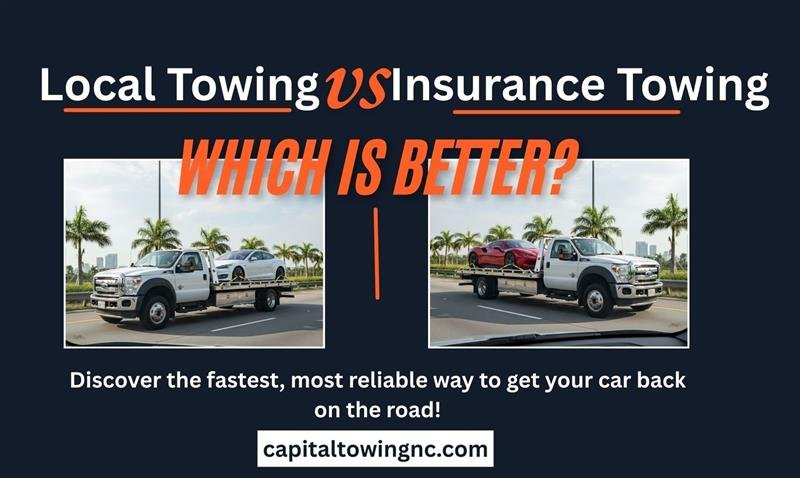
When your car breaks down, one question comes up fast: Local Towing vs Insurance Towing should you call a local towing company or go through your insurance provider? Both options sound helpful, but they work very differently. Choosing the wrong one can cost you time, money, or unnecessary stress.
This guide explains the real differences so you can decide what works best for your situation. By the end, you will know exactly when local towing makes sense and when insurance towing is the smarter choice.
What Is Local Towing?
Local towing means calling a towing company directly when you need help, often by contacting a local towing company near you. You choose who to call, where your vehicle goes, and how fast the service arrives.
Local towing companies usually operate in specific cities or regions. Because they are nearby, response times are often quicker. You also speak directly with the dispatcher or driver, which keeps communication simple.
Payment is handled upfront. There are no policy limits, approval delays, or mileage caps. What you agree to is what you pay.
What Is Insurance Towing?
Insurance towing is part of roadside assistance coverage included in many auto insurance policies. Instead of calling a tow truck yourself, you contact your insurance provider. They then assign a towing company from their approved network.
This option can feel convenient because the insurance company manages the process. In some cases, the cost is fully or partially covered. However, coverage usually comes with rules.
Most policies limit how far your vehicle can be towed and how many times you can use the service per year. You may also need to pay first and wait for reimbursement.
Local Towing vs Insurance Towing: Quick Comparison
| Feature | Local Towing | Insurance Towing |
| Response Time | Faster | Slower |
| Destination Control | Full control | Limited |
| Payment | Direct | Policy based |
| Flexibility | High | Limited |
Local Towing vs Insurance Towing: Key Differences
Understanding the core differences helps you avoid surprises during an already stressful moment.
Cost and Payment
Local towing requires out-of-pocket payment, but pricing is usually clear upfront. You know the destination, distance, and service type.
Insurance towing may seem cheaper, but hidden limits can lead to extra charges. If the tow exceeds mileage limits or coverage rules, you pay the difference.
Response Time
Local towing companies often arrive faster, especially when you need emergency towing in Raleigh, because they are not waiting for insurance approval or dispatch coordination.
Insurance towing can take longer, especially during busy hours, since the insurance company must first locate an available provider in their network.
Control and Flexibility
With local towing, you decide where your vehicle goes. That could be your home, a trusted mechanic, or a dealership.
Insurance towing may restrict destinations based on policy terms or network rules.
This is why many drivers ask: Local Towing vs Insurance Towing: Which Is Better? The answer depends on how much speed and control matter to you.
When Local Towing Is the Better Choice
Local towing is often the best option when time matters most.
If your car breaks down late at night, during bad weather, or in a dangerous location, waiting for insurance approval can be risky. A direct call to a local towing company usually gets help moving faster.
Local towing is also ideal when you want your car taken to a specific repair shop or location without restrictions.
Why Drivers Prefer Local Towing in Emergencies
Drivers who value fast service, clear pricing, and direct communication often prefer local towing in emergency situations.
For fast and reliable service in North Carolina, many drivers trust Capital Towing & Recovery because of their local knowledge, years of experience, professional certifications, and real service guarantees, ensuring dependable help when it matters most.
When Insurance Towing Makes More Sense
Insurance towing can work well for minor issues and planned situations.
If your vehicle has a dead battery, flat tire, or runs out of fuel, insurance roadside assistance may cover the service fully. This is especially useful if you rarely need towing and want to reduce immediate costs.
Insurance towing can also be helpful for long-distance drivers who want predictable coverage during travel.
The key is understanding your policy before you need it. Knowing the limits helps you decide calmly instead of under pressure.
Common Mistakes Drivers Make
Many drivers assume insurance towing covers everything. This is one of the most common mistakes.
Another mistake is not checking mileage limits. A town that goes beyond your policy’s coverage can become expensive.
Some drivers also wait too long for insurance dispatch when a local tow truck could have arrived sooner.
Understanding both options before an emergency puts you in control.
Local vs Insurance Towing: What Works Best?
There is no one-size-fits-all answer. The real question is what matters most in your situation.
If speed, flexibility, and control are your priorities, local towing is usually the better option. If budget protection and basic roadside help are more important, insurance towing can be useful.
For many drivers, the smartest approach is knowing both options and choosing based on the moment. That is the true answer to Local Towing vs Insurance Towing: Which Is Better?
Fast, Reliable Local Towing You Can Count On
If you ever need dependable towing with no policy delays, Capital Towing & Recovery stands out for its:
Customer Reviews: Highly rated by drivers for prompt and professional service.
Business Credentials: Licensed and certified towing professionals.
24/7 Towing: Always available, day or night, for emergencies
Fast Arrival Times: Quick response when every minute counts.
Licensed Operators: Skilled and certified tow operators.
Call Us Anytime – We’re Here When You Need Help!
Frequently Asked Questions
Q1. Is local towing more expensive than insurance towing?
Ans: Not always. Local towing can be cost-effective for short distances and emergencies, while insurance towing may include hidden limits that increase costs.
Q2. Does insurance towing cover all towing situations?
Ans: No. Most policies have mileage limits, service limits, and exclusions depending on the situation.
Q3. Which option is faster in an emergency?
Ans: Local towing is usually faster because it does not require insurance approval or third-party dispatch.
Q4. Can I choose where my car is towed with insurance?
Ans: Sometimes, but many insurance policies restrict destinations or prioritize network repair shops.
Q5. Should I rely only on insurance towing?
Ans: It is best to understand both options. Having a trusted local towing company can save time and stress when insurance coverage falls short.