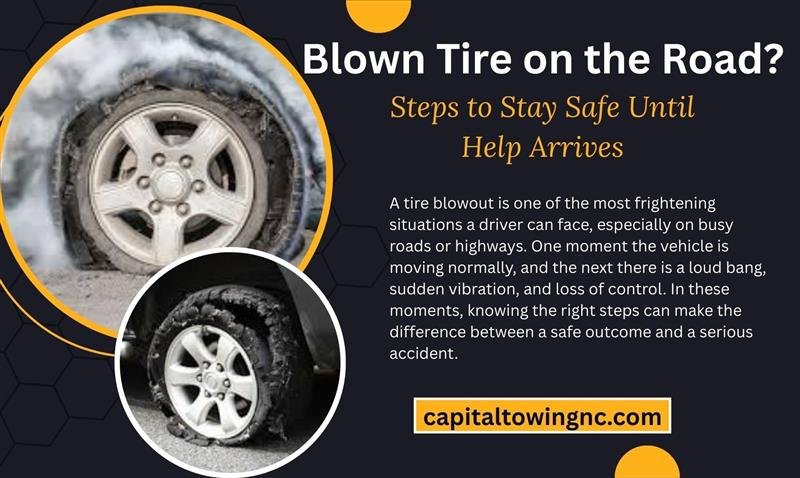
A tire blowout is one of the most frightening situations a driver can face, especially on busy roads or highways. One moment the vehicle is moving normally, and the next there is a loud bang, sudden vibration, and loss of control. In these moments, knowing the right steps can make the difference between a safe outcome and a serious accident.
At CapitalTowingNC.com, road safety is always a top priority. As a professional towing and roadside assistance provider, we believe drivers should be informed, prepared, and guided with clear safety steps. This article explains exactly what to do if you experience a blown tire on the road and how to stay safe until professional help arrives.
What Is a Tire Blowout?
A tire blowout occurs when a tire suddenly loses air pressure, often due to excessive heat, underinflation, worn tread, or road debris. Unlike a slow flat tire, a blowout happens instantly and can cause the vehicle to pull sharply to one side.
Blowouts are especially dangerous at higher speeds because they affect steering, balance, and braking. Understanding how to react calmly and correctly is essential for protecting both the vehicle and its occupants.
What to Do Immediately When a Tire Blows While Driving
The first few seconds after a tire blowout are critical. Panic or incorrect actions can increase the risk of losing control.
- Stay calm and focused. A steady reaction helps maintain control of the vehicle.
- Grip the steering wheel firmly with both hands. This prevents sudden swerving.
- Do NOT slam on the brakes. Hard braking can cause the vehicle to spin or skid.
- Ease off the accelerator gradually. Allow the vehicle to slow down naturally.
- Keep the vehicle as straight as possible. Minor steering adjustments are safer than sharp turns.
These steps help stabilize the vehicle and reduce the danger of collisions with surrounding traffic.
How to Safely Pull Over After a Tire Blowout
Once the vehicle has slowed and is under control, the next goal is to reach a safe stopping location.
- Turn on hazard lights immediately to alert other drivers.
- Signal and move toward the shoulder or a safe roadside area.
- Avoid stopping on curves, hills, or narrow lanes where visibility is limited.
- Park on level ground if possible to prevent rolling or shifting.
Stopping in a visible and secure location significantly reduces the risk of secondary accidents.
What to Do While Waiting for Help to Arrive
After pulling over safely, personal safety becomes the top priority.
- Remain inside the vehicle if traffic is heavy or the road is busy.
- Exit the vehicle only if it is clearly safe, and stand far away from traffic.
- Keep hazard lights on at all times.
- Call a professional roadside assistance or towing service if changing the tire is unsafe or not possible.
Professional assistance ensures the vehicle is handled correctly and removes unnecessary risk from the situation.
Common Mistakes to Avoid During a Tire Blowout
Many accidents occur not because of the blowout itself, but because of incorrect reactions. Avoid these common mistakes:
- Slamming the brakes immediately
- Overcorrecting the steering wheel
- Standing near moving traffic
- Attempting a tire change in unsafe conditions
- Continuing to drive on a damaged tire
Avoiding these errors improves safety and prevents further damage to the vehicle.
When to Call a Professional Towing or Roadside Service
There are situations where professional help is not just recommended it is essential:
- Blowouts on highways or high-speed roads
- Nighttime or poor weather conditions
- No spare tire or proper tools available
- Safety concerns due to traffic volume
- Visible wheel or suspension damage
In these cases, contacting CapitalTowingNC.com ensures the vehicle is recovered safely and efficiently without putting anyone at risk.
How to Prevent Tire Blowouts in the Future
Prevention plays a major role in road safety. Simple maintenance steps can significantly reduce the risk of blowouts:
- Check tire pressure regularly
- Inspect tires for cracks, bulges, or worn tread
- Rotate tires according to manufacturer recommendations
- Avoid overloading the vehicle
- Replace old or damaged tires promptly
Proactive maintenance helps keep drivers safer on the road.
Blown Tire on the Road? Steps to Stay Safe Until Help Arrives
Staying calm, maintaining control, pulling over safely, and waiting for professional assistance are the most reliable ways to protect lives and vehicles.
As a trusted towing and roadside assistance provider, CapitalTowingNC.com remains committed to guiding drivers through emergencies with clear, safety-focused information. When tire trouble happens, professional support ensures peace of mind and a safer outcome for everyone involved.
Need fast, reliable towing or roadside assistance after a tire blowout?
Contact Capital Towing NC today for professional help you can trust available when safety matters most.
FAQs
1. Can you continue driving after a tire blowout?
Ans: No. Driving on a blown tire can cause severe damage and loss of control. Always pull over safely as soon as possible.
2. Is it safe to change a tire on the highway?
Ans: In most cases, it is not safe. High traffic speed and limited space increase risk. Professional roadside assistance is safer.
3. What causes tire blowouts most often?
Ans: Common causes include underinflation, worn tread, overheating, road debris, and overloaded vehicles.
4. How long should you wait for roadside assistance?
Ans: Wait inside your vehicle with hazard lights on. Response times vary, but safety is more important than speed.
5. Should hazard lights stay on while waiting?
Ans: Yes. Hazard lights improve visibility and alert other drivers to your stopped vehicle.