Electric vehicles are changing the way people drive, and they are also changing the way towing services operate. EVs are engineered differently from petrol and diesel cars, which means towing them requires a deeper understanding of modern vehicle systems. Towing Electric Vehicles: What Makes Them Different? is not just a technical question. It is a critical factor in protecting the vehicle, its battery, and its long-term performance.
As EV ownership continues to rise, understanding the right towing methods has become essential for both drivers and towing professionals.
Why Electric Vehicles Need Special Towing Care
Electric vehicles are powered by electric motors instead of internal combustion engines. These motors are directly connected to the wheels, which creates challenges during towing.
Unlike traditional vehicles, EVs often do not fully disengage their drivetrain when placed in neutral. This means wheel movement during towing can create unwanted electrical energy and mechanical stress.
Because of this, Towing Electric Vehicles: What Makes Them Different? comes down to how power flows through the vehicle even when it appears to be turned off.
How Regenerative Braking Affects Towing
Most EVs use regenerative braking systems. These systems convert motion into electricity and send it back to the battery.
When an EV’s wheels spin during towing, the motor can continue generating electricity. This can overload sensitive electronic components that are not designed to handle power input in that situation.
Over time, this can lead to inverter damage, error codes, or battery-related faults that may not show up immediately.
Why Flatbed Towing Is the Safest Option
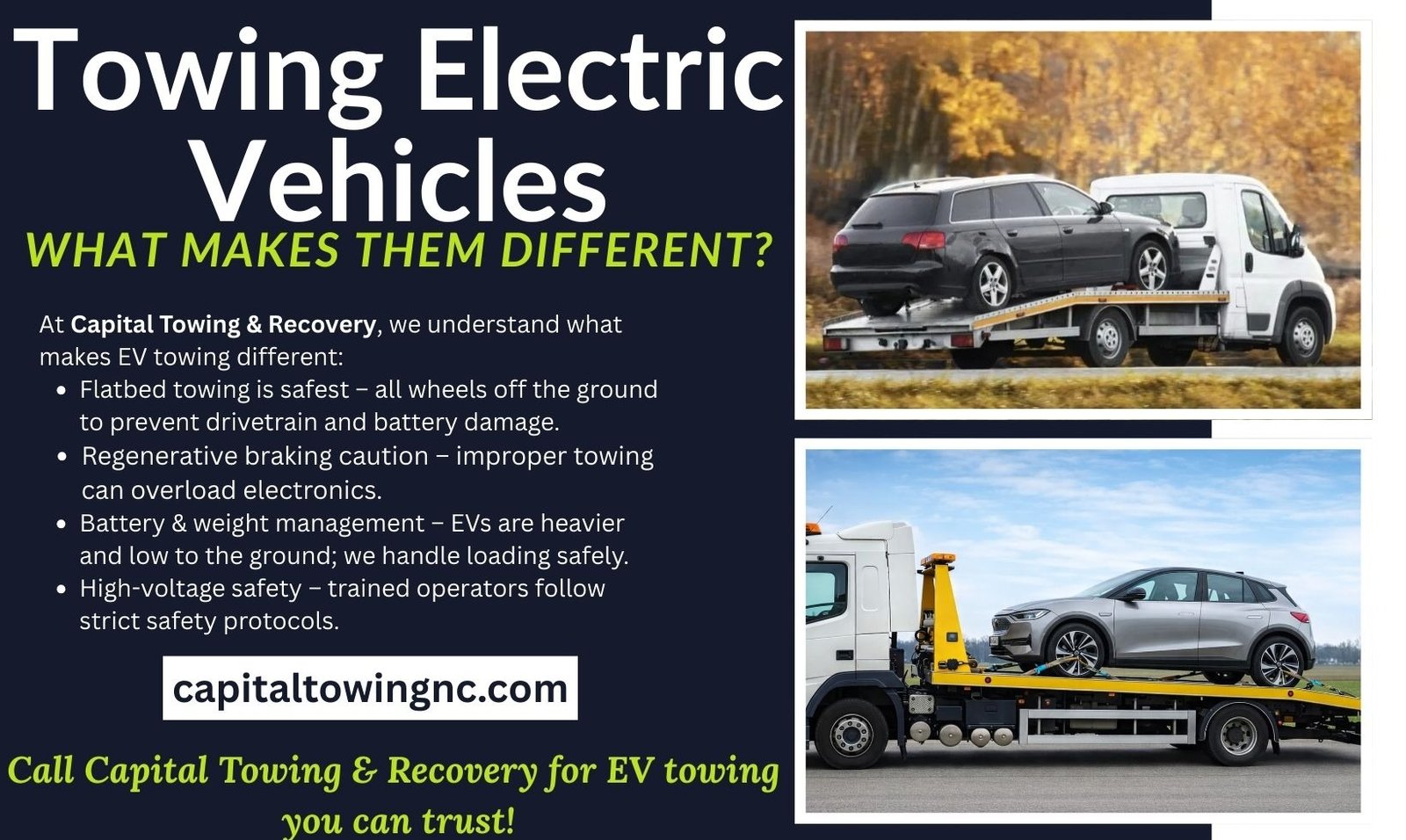
Flatbed towing is widely considered the safest and most manufacturer-approved method for transporting electric vehicles.
With all four wheels off the ground, there is no wheel rotation. This eliminates the risk of regenerative power generation and drivetrain stress.
At Capital Towing & Recovery, flatbed towing is the preferred method for EV transport because it aligns with modern vehicle safety standards and manufacturer recommendations.
Battery Weight and Vehicle Design Challenges
Electric vehicles are heavier than many conventional cars. The battery pack alone can weigh hundreds of kilograms and is usually mounted underneath the vehicle.
This low battery placement lowers the center of gravity but also reduces ground clearance. Improper loading angles or poor ramp setup can cause scraping or underbody damage.
Our towing approach takes vehicle weight distribution and clearance into account to reduce risk during loading and unloading.
High-Voltage Safety Considerations
EVs operate on high-voltage electrical systems that require careful handling during towing.
After an accident or breakdown, damaged battery components or wiring can increase safety risks. This is why trained operators follow strict safety procedures when securing and transporting electric vehicles.
Professional EV towing is not just about moving the car. It is about protecting everyone involved in the process.
What Can Go Wrong With Incorrect EV Towing
Improper towing methods can result in serious and costly problems.
These may include damage to the electric motor, overheating of electronic components, or faults within the battery system. In some cases, incorrect towing can also affect warranty coverage.
These risks highlight exactly why Towing Electric Vehicles: What Makes Them Different? is a question every EV owner should understand.
Manufacturer Guidelines Are Not Optional
Every electric vehicle manufacturer provides specific towing instructions in the owner’s manual.
Some models allow limited towing under very controlled conditions, while others strictly require flatbed transport only. There is no universal rule that applies to all EVs.
Following manufacturer guidelines is essential to avoid damage and ensure the vehicle remains protected during transport.
Choosing the Right EV Towing Service
Not all towing services are equipped to handle electric vehicles properly.
When choosing a towing provider, it is important to confirm:
- Flatbed truck availability
- Experience with electric vehicles
- Knowledge of EV safety protocols
- Proper loading and securing techniques
At Capital Towing & Recovery, our team understands the unique requirements of electric vehicles and uses the correct equipment to match modern towing needs.
The Importance of Experience in EV Towing
Electric vehicles continue to evolve, and towing practices must evolve with them.
Experience matters when dealing with advanced drivetrains, high-voltage systems, and manufacturer-specific rules. Professional handling helps prevent unnecessary damage and costly repairs.
Choosing an EV-aware towing service provides peace of mind when it matters most.
Towing Electric Vehicles: Why Specialized Care Matters
Electric vehicles are advanced machines that demand specialized care. Towing Electric Vehicles: What Makes Them Different? comes down to understanding drivetrain design, battery safety, and correct transport methods.
As EV adoption grows, proper towing practices are no longer optional. They are essential for protecting the vehicle and maintaining long-term reliability.
Electric Vehicle Towing & Roadside Assistance – Choose the Right Experts
If an electric vehicle ever needs towing or roadside assistance, choosing the right service makes all the difference.
Contact Us for professional towing service with EV experience, proper flatbed equipment, and trained operators to ensure safe and damage-free transport.
Frequently Asked Questions
Q1. Can electric vehicles be towed with wheels on the ground?
Ans: In most cases, no. Many EV manufacturers recommend flatbed towing to prevent drivetrain and electrical damage.
Q2. Why is flatbed towing recommended for EVs?
Ans: Flatbed towing keeps all wheels off the ground, eliminating regenerative braking risks and drivetrain stress.
Q3. Are electric vehicles heavier than petrol cars?
Ans: Yes. EVs are generally heavier due to large battery packs, which affects towing equipment and handling.
Q4. Can incorrect towing damage an EV battery?
Ans: Yes. Improper towing can cause electrical faults or battery system issues that may not be immediately visible.
Q5. Should the towing company know the vehicle is electric?
Ans: Absolutely. Informing the towing provider ensures the correct equipment and procedures are used.