Car trouble rarely gives advance warning. A flat tire, dead battery, overheating engine, or sudden weather change can leave any driver stranded. That is why an Emergency Roadside Checklist Every Driver Should Keep in Their Car is not optional. It is a basic safety measure that protects drivers, passengers, and vehicles in unpredictable situations.
Prepared drivers stay calmer, safer, and more in control when something goes wrong on the road.
Why Every Driver Needs an Emergency Roadside Checklist
Breakdowns can happen anywhere. Busy highways, quiet back roads, or parking lots late at night. In these moments, having the right supplies nearby can make a serious difference.
An emergency checklist helps reduce risk, improve visibility, and keep drivers safe while waiting for help. It also prevents small problems from turning into dangerous situations.
We recommend treating roadside preparedness as part of regular vehicle ownership, not something to think about after an emergency happens.
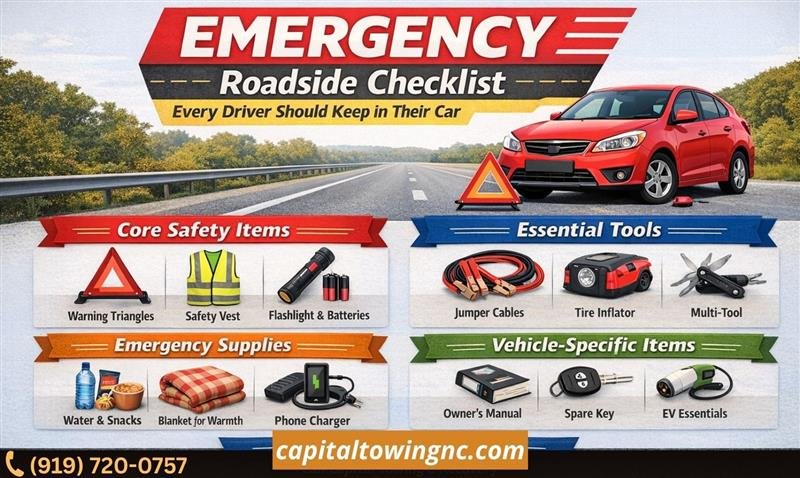
Core Safety Items to Keep in Your Car
Safety comes first in any roadside situation. These items help protect you and alert other drivers.
Reflective warning triangles or road flares: make your vehicle visible from a distance, especially at night or in poor weather.
High-visibility safety vest: increases your visibility when stepping outside the vehicle.
Reliable flashlight with spare batteries: helps in low-light conditions and allows safe vehicle inspection.
Essential Tools for Common Roadside Problems
Some emergencies can be handled quickly if the right tools are available.
- Jumper cables or a portable jump starter: essential for dead batteries, as many breakdowns start with battery issues.
- Tire inflator or spare tire kit: helps manage slow leaks or flats; use a tire pressure gauge to avoid guesswork.
- Basic multi-tool or small toolkit: useful for loose parts, hose clamps, or minor adjustments.
At Capital Towing & Recovery, we often see situations where simple tools could have helped drivers get moving faster.
Emergency Supplies for Comfort and Safety
Roadside emergencies are not always quick. Being prepared for longer waits matters.
- Bottled water: essential in hot climates to prevent dehydration.
- Non-perishable snacks: such as energy bars, provide sustenance during long delays.
- Blanket or thermal wrap: important for cold nights or winter travel to stay comfortable.
- Phone charger or power bank: ensures you can call for help or use navigation apps without worrying about battery life.
Keeping these emergency supplies in your car helps you stay safe and prepared during unexpected breakdowns or delays.
Vehicle-Specific Items Drivers Often Forget
Many drivers focus on general supplies but forget vehicle-specific essentials.
- Printed owner’s manual: helpful if dashboard warning lights appear or systems behave unexpectedly.
- Spare key: stored safely in the emergency kit to prevent lockout situations.
- EV charging adapters or manufacturer-recommended emergency equipment: essential for electric vehicle drivers.
- Customized emergency kit: preparedness varies by vehicle; drivers should tailor their kits to their needs.
Having these items in your car ensures you’re ready for unexpected situations and can handle emergencies efficiently.
Seasonal Add-Ons That Improve Preparedness
Roadside needs change with the seasons, and emergency kits should reflect that.
In winter, include ice scrapers, gloves, traction aids, and windshield washer fluid rated for freezing temperatures.
During summer, add sunscreen, extra water, and cooling towels to manage heat exposure.
Rainy seasons may require ponchos, towels, or traction mats to handle slippery surfaces.
An Emergency Roadside Checklist Every Driver Should Keep in Their Car should be reviewed at least twice a year to stay relevant.
How to Store and Maintain Your Emergency Kit
An emergency kit only works if it is accessible and functional.
Store items in a sturdy container in the trunk or rear cargo area. Avoid loose items that can shift during driving.
Check expiration dates on food, water, and batteries every few months.
Test flashlights and power banks regularly to ensure they work when needed.
At Capital Towing & Recovery, we recommend reviewing kits during oil changes or routine vehicle maintenance.
When a Checklist Is Not Enough
Some situations require professional assistance regardless of preparation.
Major mechanical failures, accident damage, or high-voltage vehicle issues should always be handled by trained roadside professionals.
Knowing when to stay safe and call for help is just as important as being prepared.
That is where reliable roadside assistance plays a key role in protecting drivers and vehicles.
Emergency Roadside Checklist: Stay Prepared and Safe on the Road
An Emergency Roadside Checklist Every Driver Should Keep in Their Car is a simple investment that delivers real peace of mind. Preparation reduces stress, improves safety, and helps drivers handle unexpected situations with confidence.
We encourage every driver to review their checklist, update it seasonally, and take roadside safety seriously. When emergencies happen, preparation makes all the difference.
Reliable Roadside Support You Can Count On
If a roadside situation goes beyond what an emergency kit can handle, professional help matters. Contact Capital Towing & Recovery for dependable roadside assistance and towing support when safety and experience are essential.
Call Us Now: For fast, reliable towing and roadside assistance, speak directly with our team and get help on the way immediately.
Frequently Asked Questions
Q1. What should every emergency roadside kit include?
Ans: Every kit should include safety items, basic tools, water, a flashlight, and a phone charging solution.
Q2. How often should a roadside emergency kit be checked?
Ans: At least twice a year, or whenever seasons change.
Q3. Are emergency kits different for winter driving?
Ans: Yes. Winter kits should include cold-weather gear like gloves, blankets, and ice tools.
Q4. Should electric vehicle drivers carry a different checklist?
Ans: Yes. EV drivers should include charging adapters and vehicle-specific emergency items.
Q5. Where should an emergency kit be stored in a car?
Ans: The trunk or cargo area is ideal, as long as items are secured and easy to access.