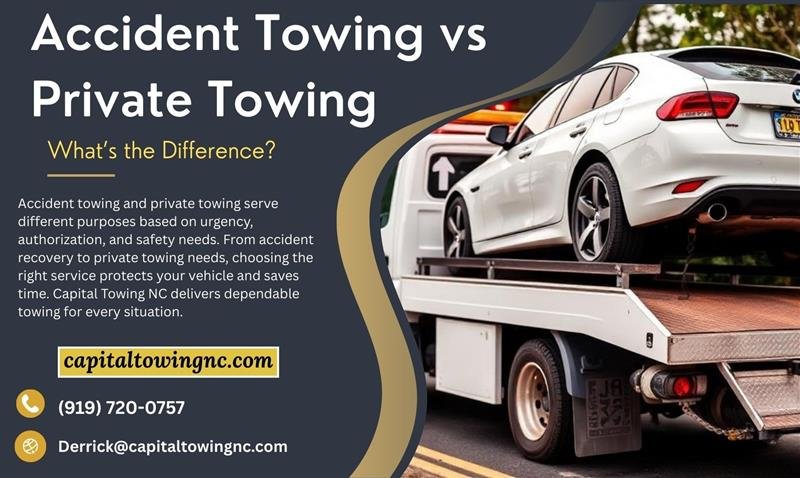
When a vehicle needs towing, many drivers assume all towing services work the same way. That is rarely the case. Accident Towing vs Private Towing: What’s the Difference? is an important question, especially during stressful situations like crashes or breakdowns.
Each type of towing serves a different purpose. Knowing the difference helps you respond faster, avoid unnecessary costs, and protect your vehicle.
Understanding Accident Towing
Accident towing is used when a vehicle is involved in a collision and cannot be driven safely. This type of towing focuses on safety, traffic control, and quick response.
It is commonly coordinated with law enforcement or emergency responders. The goal is to clear the roadway, prevent further accidents, and secure damaged vehicles.
Special equipment is often required to handle severe damage or immobile vehicles. Accident towing compared to private towing services involves higher risk and stricter procedures.
What Private Towing Means
Private towing is used in non-emergency situations. These include vehicle breakdowns, illegal parking, or removal from private property.
This service does not usually involve police unless required by local law. Property owners, businesses, or vehicle owners can request private towing when needed.
The difference between accident towing and private towing becomes clear here. Private towing is planned or requested, while accident towing is urgent and safety-driven.
Accident Towing vs Private Towing: What’s the Difference?
Accident Towing vs Private Towing: What’s the Difference? mainly comes down to urgency, authorization, and responsibility.
Accident towing happens after collisions and often includes police or insurance involvement. Private towing happens due to parking issues or mechanical problems.
Another key difference is timing. Accident towing requires immediate action, while private towing may be scheduled or requested in advance.
Authorization and Control
Accident towing is often authorized by law enforcement at the scene. This ensures traffic safety and legal compliance.
Private towing is authorized by property owners or vehicle owners. Clear permission and proper documentation are required to avoid disputes.
Understanding who authorizes the tow helps prevent confusion and delays.
Cost and Payment Responsibility
With accident towing, insurance coverage often pays part or all of the cost. Coverage depends on your policy and the situation.
Private towing fees are usually paid directly by the vehicle owner. Costs can vary based on distance, time, and vehicle type.
Clear pricing and transparency are essential in both cases.
Legal and Safety Requirements
Accident towing follows strict safety and traffic regulations. These rules protect drivers, responders, and the public.
Private towing must comply with local laws, including signage and notice requirements. Improper towing can result in legal issues.
Working with a reputable towing company ensures all regulations are followed correctly.
When You Need Accident Towing
You need accident towing when:
- Your vehicle is involved in a collision
- The car is unsafe to drive
- Traffic flow or public safety is affected
These situations require fast and professional response.
When Private Towing Is the Right Choice
Private towing is the right option when:
- Your vehicle breaks down
- You are parked illegally
- A property owner requests removal
- You need non-emergency relocation
This type of towing focuses on convenience and compliance.
Why Choosing the Right Towing Company Matters
Towing is more than moving a vehicle. It requires experience, proper equipment, and legal awareness.
CapitalTowingNC.com provides reliable towing solutions designed to handle both emergency and non-emergency situations with care and precision.
Every call is handled with attention to safety, efficiency, and vehicle protection.
Local Towing in Accident Situations
Local towing is often required after an accident when a vehicle needs to be moved a short distance from the crash site. This usually includes towing the vehicle to a nearby repair shop, storage facility, or a safe location off the roadway.
In accident towing situations, local towing focuses on fast response and secure handling to prevent further damage. It is commonly used for minor to moderate accidents where long-distance transport is not necessary. This approach helps clear traffic quickly while keeping costs more manageable.
Long-Distance Towing for Private Towing Needs
Long-distance towing is commonly used in private towing situations when a vehicle needs to be transported across cities or to a distant repair facility. This often applies to breakdowns, vehicle relocations, or cases where the owner chooses a specific service center that is not nearby.
Trusted providers like CapitalTowingNC.com manage private long-distance towing with precision, efficiency, and complete attention to vehicle care, giving owners confidence from pickup to delivery.
Dependable Towing Services You Can Trust in Every Situation
Accident Towing vs Private Towing: What’s the Difference? Understanding this helps you act quickly and confidently during unexpected situations.
For professional, dependable towing services you can trust, CapitalTowingNC.com is ready to help.
Need immediate towing or expert guidance? Contact Capital Towing NC today for fast, reliable service.
FAQs
Q1. Is accident towing always required after a crash?
Ans: Not always. If the vehicle is safe to drive, towing may not be necessary unless ordered by authorities.
Q2. Can I request my own towing company after an accident?
Ans: In many cases, yes. If allowed, you can choose a trusted towing provider.
Q3. Is private towing legal without warning?
Ans: Private towing must follow local laws, including proper signage and authorization.
Q4. Does insurance cover private towing?
Ans: Some policies include roadside assistance, but many private towing situations are paid out of pocket.
Q5. Which towing service costs more?
Ans: Accident towing can involve more complexity, but private towing costs vary depending on circumstances.